Most “door trend” articles are fashion writing. This one is about the handful of changes that actually affect a specification — what has genuinely moved in door hardware, materials and performance expectations, and what a buyer should ask about each of them.
Smart locks: what has really changed
The change is not that locks are electronic. Mechanical keypad locks have been around for decades. What has changed is that access control has become affordable at residential scale and is now expected on mid-range projects, not only on premium ones.
Three capabilities now sit behind a domestic-looking handle: keyless entry by code, card or phone; remote issue and revoke of access, so a cleaner or a delivery can be let in without a physical key; and an audit trail, which is the feature that matters most commercially and is the one most often overlooked.
What to check before you specify one:
- Fail-safe or fail-secure. A lock that opens on power failure is correct for a fire escape route and wrong for a strongroom. This is a life-safety decision, not a preference.
- Mechanical override. Battery-powered locks fail. Confirm there is a key or an external power input, and confirm it is accessible from outside the door.
- Compatibility with the door. Backset, door thickness and the lock case size all have to match the leaf you are hanging. Most retrofit failures are dimensional, not electronic.
- Where the credential lives. Ask whether the lock stores data locally or in an account, what happens to that data when the subscription ends, and who owns it.
One thing has not changed: a smart lock on a badly hung door still fails. Alignment, hinge quality and frame rigidity decide whether any lock works reliably.
Materials: what is actually being specified
Sustainability in doors is mostly a materials story, and the honest version is more interesting than the marketing version.
Wood-plastic composite (WPC) and PVC are the two materials that have moved most, because they address the failure mode that ends most door lives in humid climates: water reaching the core. In a WPC leaf the wood fibre is encapsulated in polymer rather than simply covered by a finish, which is a construction-level answer rather than a coating-level one. We describe the mechanism in our buyer’s checklist for specifying WPC doors.
Bamboo, recycled aluminium and bio-based resins are all genuinely used. The relevant question for each is not whether it is renewable but whether the finished assembly performs: water absorption, dimensional stability, surface hardness and fire classification to a named standard. A material being sustainable does not make it suitable for a wet room.
Where a supplier makes a sustainability claim, the useful response is to ask which standard it is measured against and to see the report. Claims that cannot name a standard are marketing.
Energy performance: the door is part of the envelope
Door energy performance has become a specification item rather than a nice-to-have, largely because building codes now treat the door as part of the thermal envelope.
The figures that decide it are the U-value of the assembled door, its air permeability and its watertightness. For external doorsets in the European market the harmonised product standard is EN 14351-1, with performance classes for air permeability (EN 12207), watertightness (EN 12208) and wind resistance (EN 12210); thermal transmittance is calculated or measured under EN ISO 10077 or EN ISO 12567. In the US market the equivalent performance is commonly expressed through NFRC ratings and tested under AAMA/WDMA/CSA 101/I.S.2/A440.
One practical point is more important than any of those numbers: on a real building, the perimeter seal usually decides how a door performs, not the leaf. A well-made door in a poorly sealed opening will underperform a modest door that has been installed properly. Check the seal before you upgrade the door.
Minimalist detailing: slim frames and concealed hinges
Slim frames and hidden hinges are the dominant aesthetic, and both are engineering decisions as much as design ones.
- A slim frame leaves less material around the lock case and the hinge positions. It works, but the profile has to be designed for it — typically with a steel or aluminium reinforcement inside. Ask what is inside the frame, not just how wide it is.
- Concealed hinges remove a visible line but put the whole leaf weight behind the face. They need a leaf that is flat and stable, and more precise installation than a surface-fixed hinge. On a heavy leaf they also need a frame that can take the moment they apply.
The failure mode to watch for is a slim, light-looking door on a heavy solid leaf, where the aesthetics and the structure disagree.
Multi-function entrances: parcel compartments and the like
Integrated parcel boxes and delivery compartments are a real product category now, driven by the sharp rise in home deliveries. Two cautions. First, in most cases this is a separate unit built into the wall or the reveal rather than a feature of the door leaf itself, so it needs to be planned at design stage. Second, if the door is part of a rated assembly, any modification to it — including cutting in a compartment — invalidates the rating unless the modification is part of the tested configuration.
What all four trends have in common
Each of them is a decision about the assembly, not the leaf. Access control depends on the frame and hinges. Thermal performance depends on the perimeter seal. A slim frame depends on what is hidden inside it. A parcel box depends on the wall around it. That is the theme worth taking from this year’s trends, and it is the reason the useful questions to a supplier are about construction and test evidence rather than about style.
What we produce
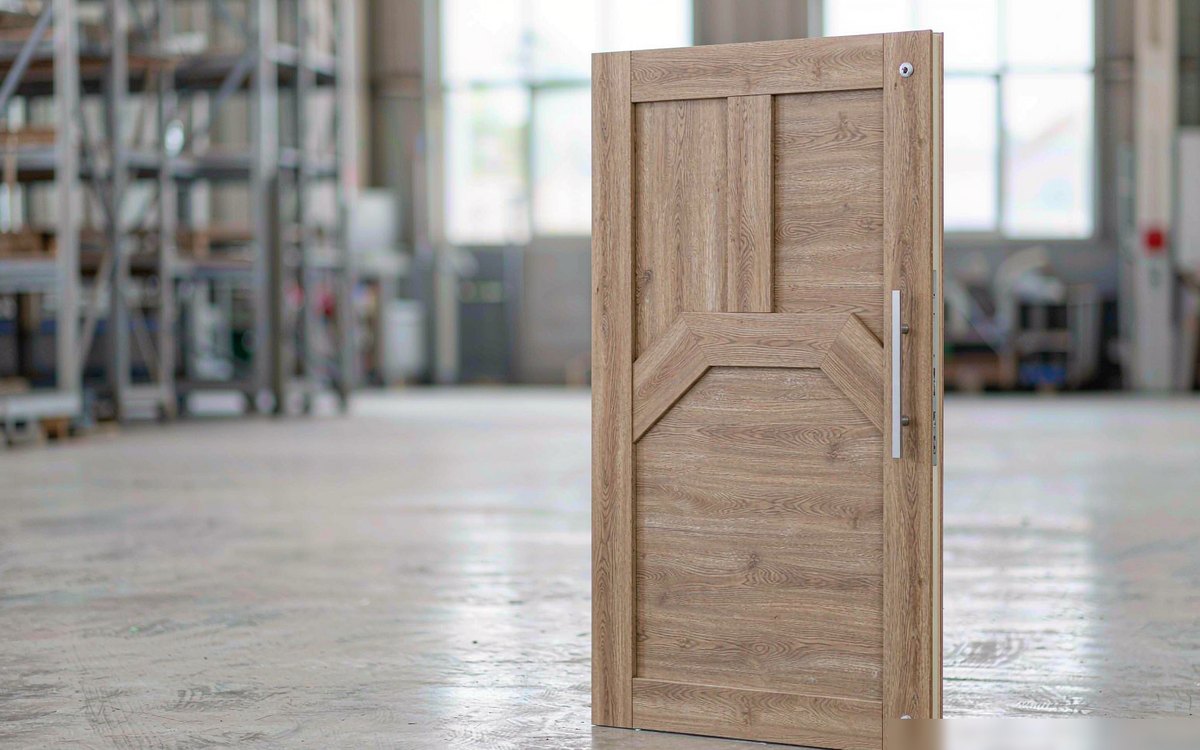
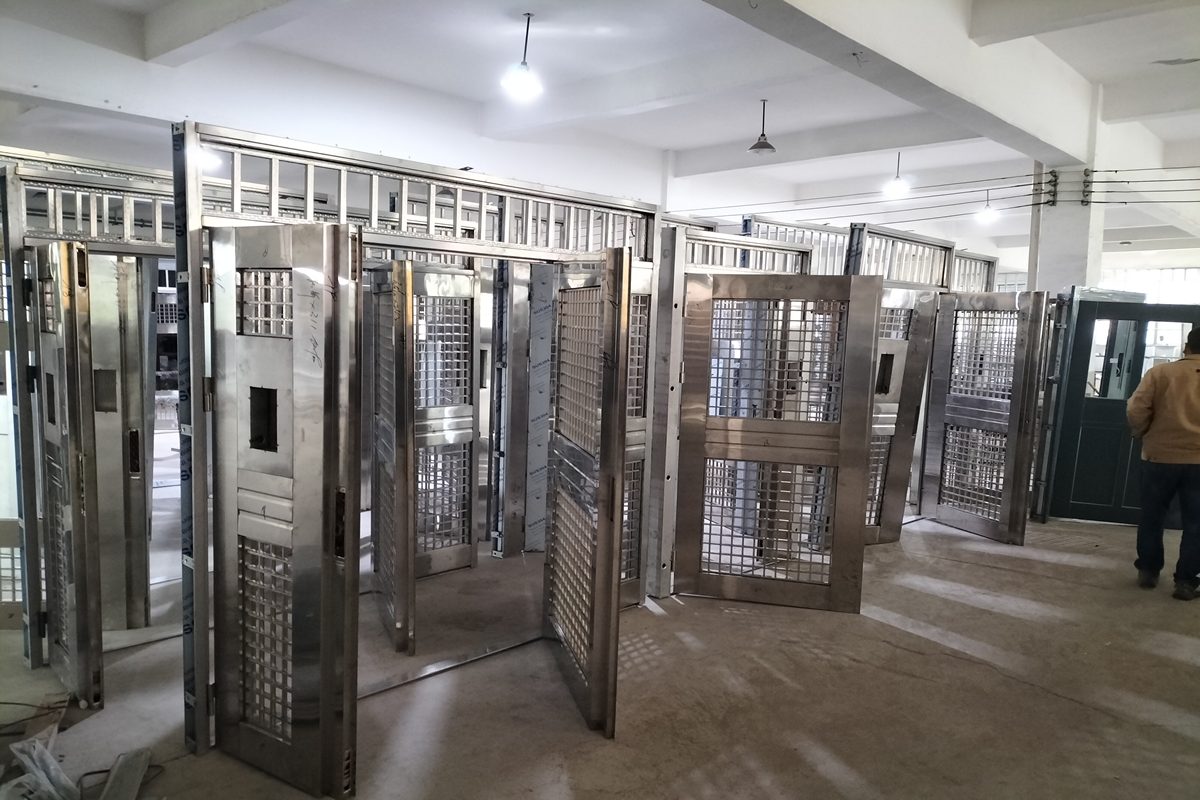
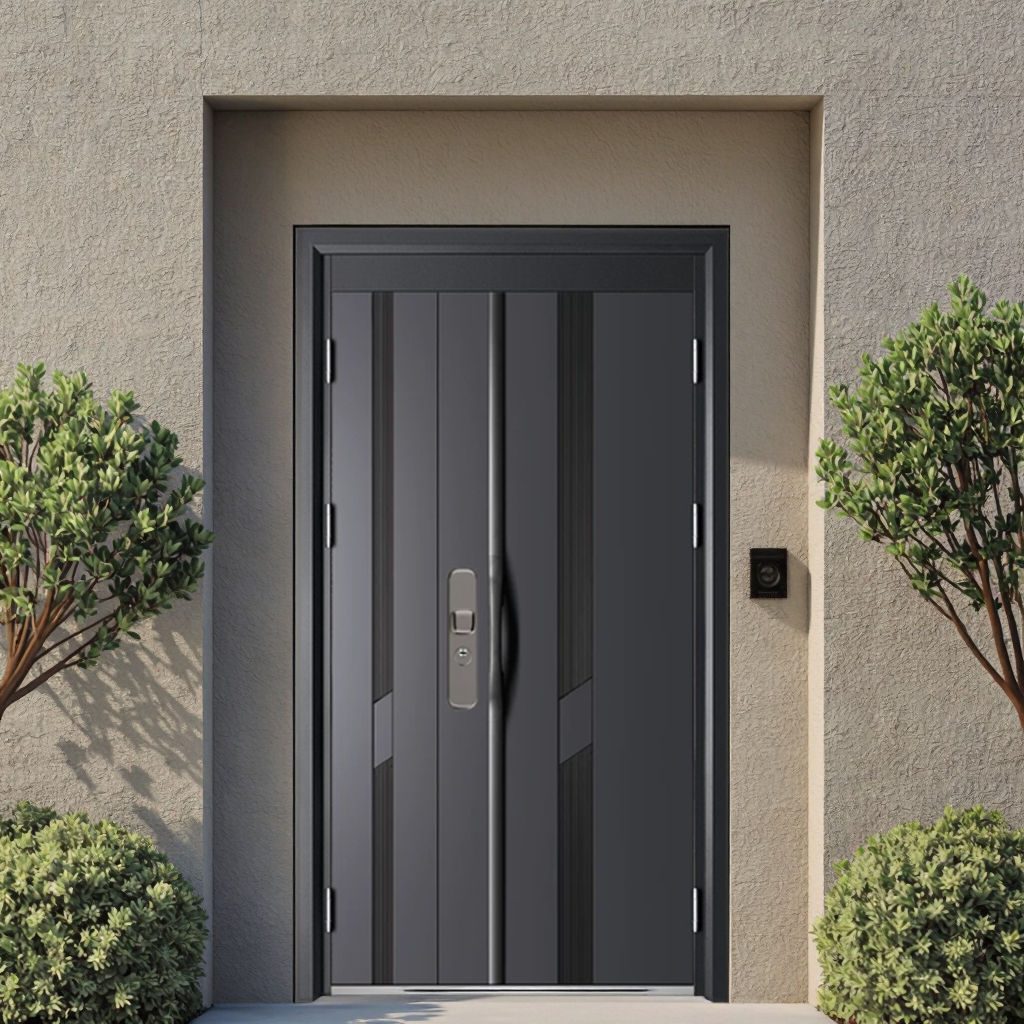
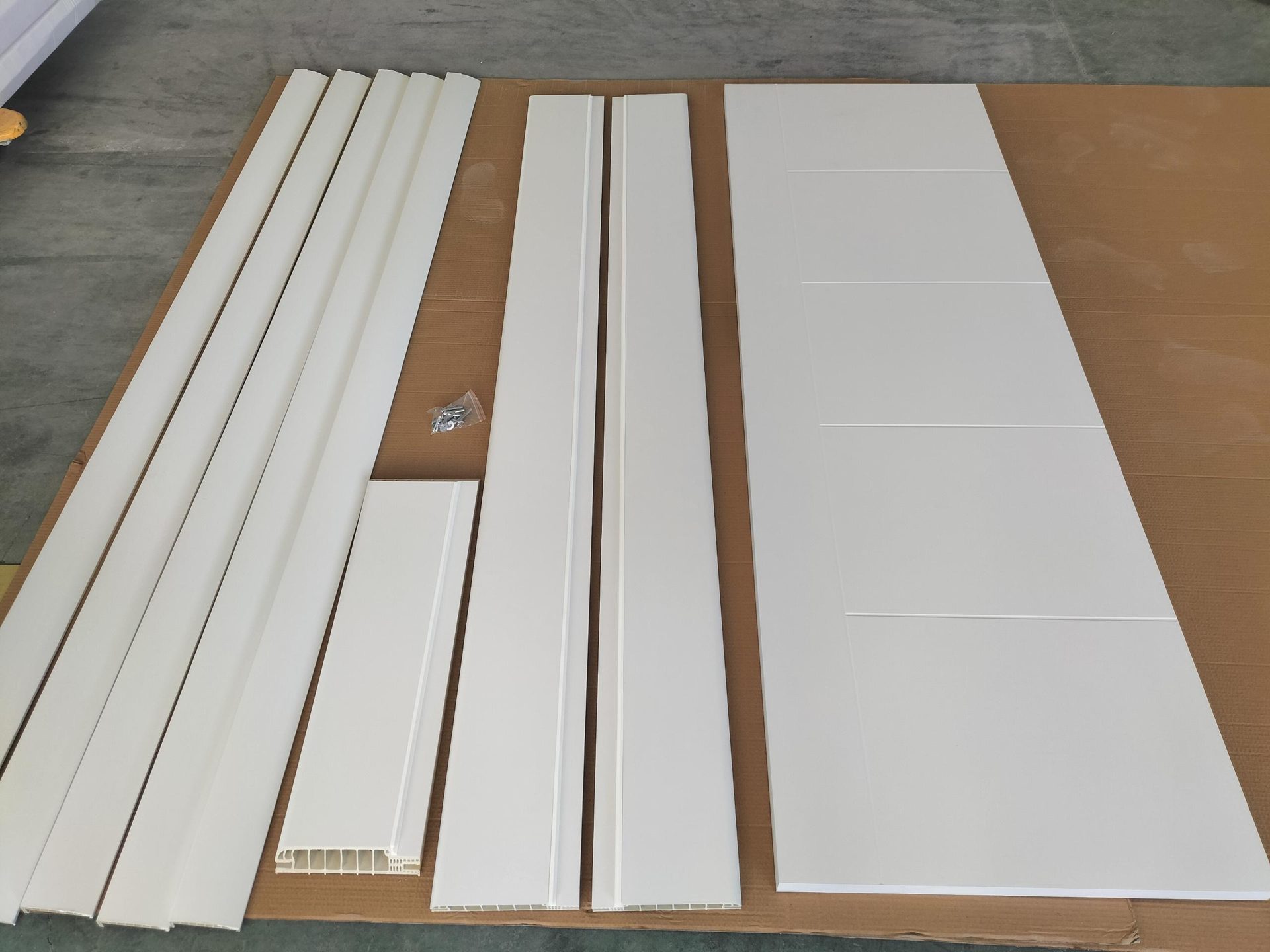
We manufacture WPC, PVC and wood door systems, with frames, mouldings and hardware supplied as a matched set — that is the core of the range and the part we control end to end. Alongside it we build steel and steel-wood entry doors, including factory-finished and powder-coated colours, and we supply glazed door sets and coordinated hardware to order, so a single supplier can cover the entrance as well as the interior.
If a project calls for smart hardware, a glazed screen or a steel entrance matched to a given RAL colour, send us the requirement with the door schedule and we will come back with the specification, the compatible hardware and the finish options.
Our specification checklist sets out the figures to put in a purchase order and the standards each one should be measured against.
Next step: Send us the application, the destination market and the volume, and we will send the technical data sheet for the matching door construction along with sample availability.
Explore our WPC door range · See our core materials · About our factory